
FVRD Budgets

Welcome to the FVRD's Financial Planning public engagement site!
This site will provide financial planning information for the current four-year FVRD Board term (2026-2030).
As a regional district and local government for nearly 325,000 diverse residents, it is very important for the FVRD to understand the needs and to provide transparency in how tax funds are allocated. Budgets and taxes drive the stability of the services we provide.
Please click on the following options to navigate throughout the webpage:
 Budget Process |  Budget Catalogue |  Taxation & Assessment |  Surveys & Feedback |
The FVRD provides over 100 services. To understand which services exist for your area, please navigate through the presentation files to the right based on your electoral area or municipality. The FVRD will continue to build materials as the budget cycles continue each year, so please subscribe!
 Thank you for taking the time to learn more about the FVRD's Financial Plan. Please share your thoughts with us by emailing budget@fvrd.ca We want to hear from you!
-
Where to find Budgets
Share Where to find Budgets on Facebook Share Where to find Budgets on X (formerly Twitter) Share Where to find Budgets on Linkedin Email Where to find Budgets linkBudget Catalogue
For specific services in your area, please visit our FVRD Services section (right column on main screen).
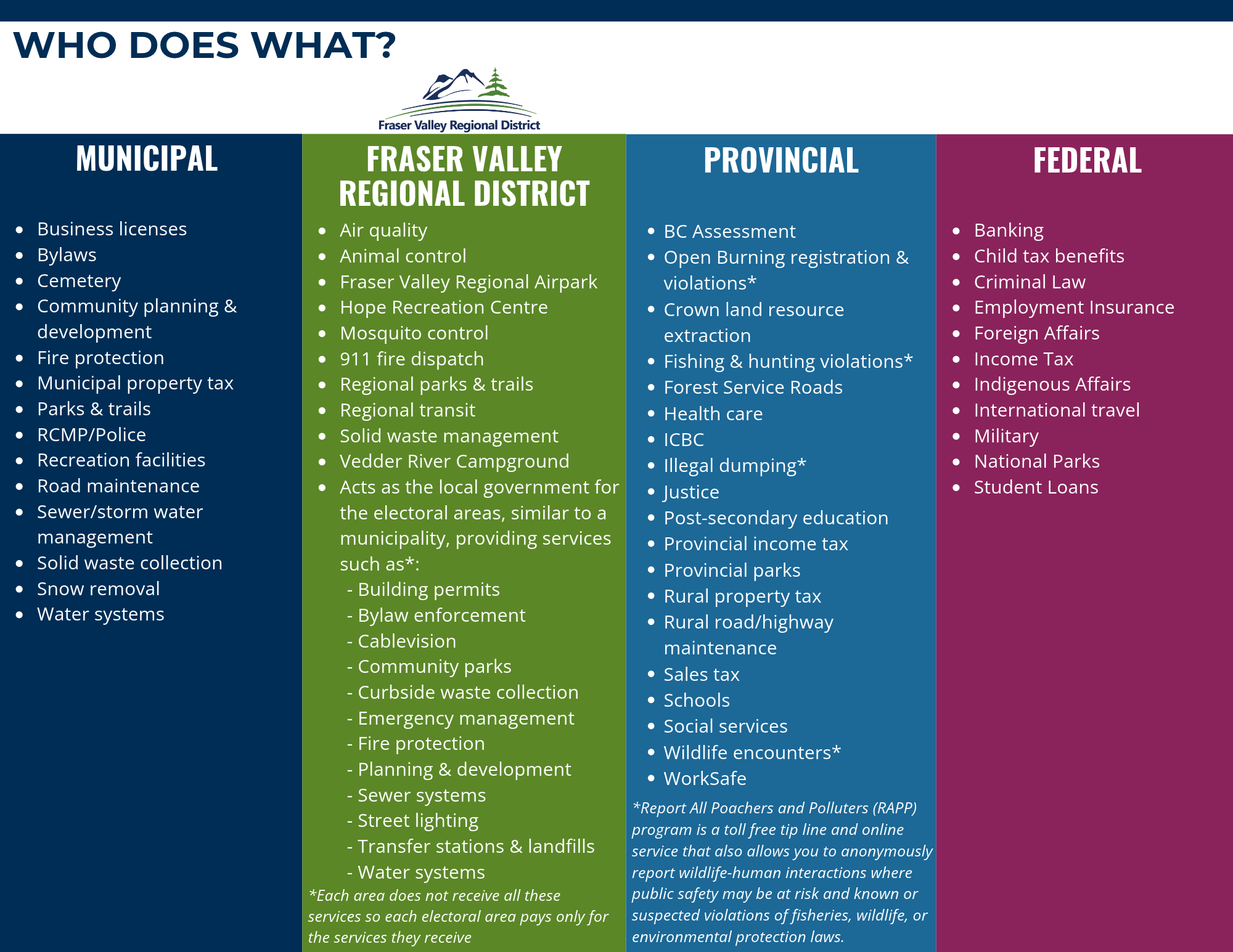
With over 100 services and multiple budget presentations, the financial planning team will continue to provide materials summarized by Electoral Area or Municipality. Subscribe to stay informed!
-
How Taxes (and Assessment) work
Share How Taxes (and Assessment) work on Facebook Share How Taxes (and Assessment) work on X (formerly Twitter) Share How Taxes (and Assessment) work on Linkedin Email How Taxes (and Assessment) work linkIn regional districts, residents pay only for the services they benefit from. Money collected for one service budget cannot be transferred to another service budget.
I live in a Municipality: Each municipality collects regional district taxes from properties within their boundaries for the services they subscribe to. For information on what regional or sub-regional services the FVRD provides, click on your municipality folder under FVRD Services (on the main screen, right).
I live in an Electoral Area: You must pay property taxes directly to the Province of BC. In rural areas of B.C., property tax notices are provided by the Province of BC's Surveyor of Taxes. If you have questions regarding your tax notice or require payment information, please contact your local Service BC Centre or visit the Provincial website.
For information on what services the FVRD provides in your area, find your service listing in FVRD Services on the main page.

BC Assessment and why it matters
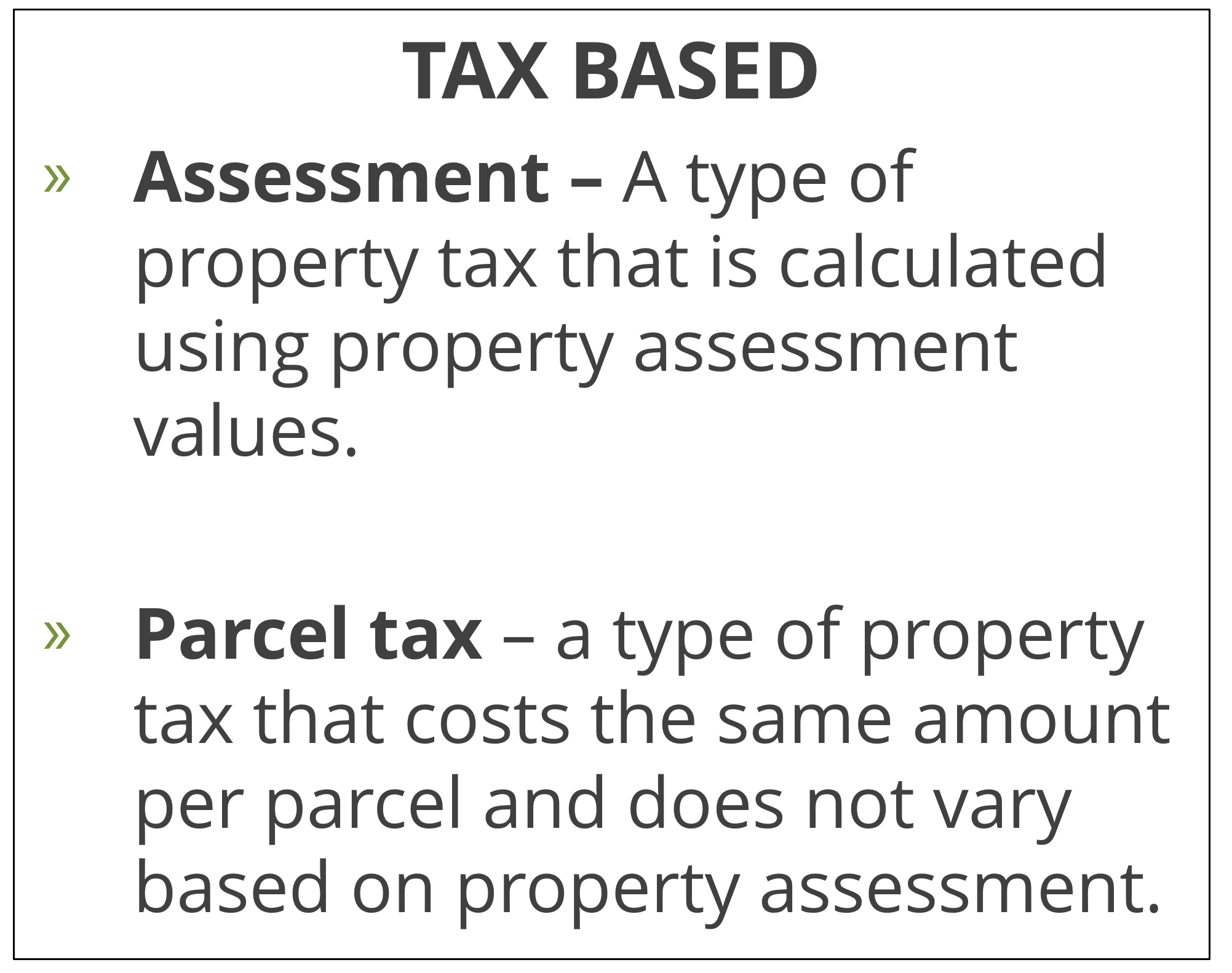
The FVRD collects assessment-based taxes and parcel taxes as taxed funding sources from residents.
Tax types are decided through bylaw and FVRD budget creation.
For each service budget, an estimated tax impact is included for residential properties which can be found in the budget catalogue as we proceed through the budget process.
For both types of taxation, BC Assessment provides property information to Provincial and Municipal governments to calculate taxes. For more information on how BC Assessment calculates your property, please visit their website.
-
Budget Process
Share Budget Process on Facebook Share Budget Process on X (formerly Twitter) Share Budget Process on Linkedin Email Budget Process linkThe Financial Planning process can seem long as we ensure that there are appropriate check-ins with the Board of Directors along the way. Subscribe and follow along through the Budget Timeline on the main page (right-side).
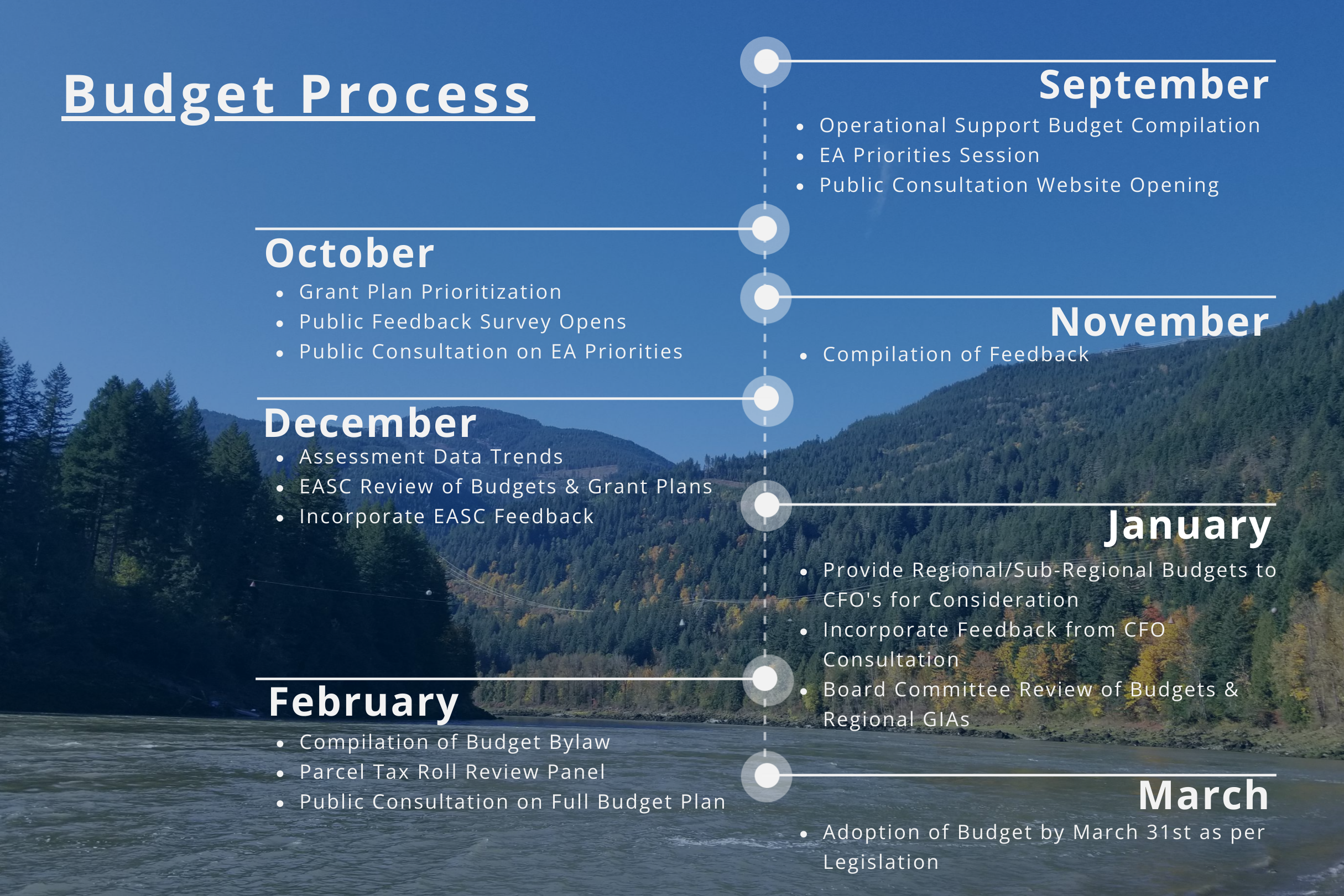
How are Budgets Built?
Budgets focus on legislative requirements and existing commitments before exploring new projects. The FVRD recognizes that costs are rising which remains true for local governments as well. Building a budget is a phased approach over many months before they are presented for a decision at the Board of Directors table:
1. Base Budget: review existing priorities/commitments, policies, and estimates (inflation, savings, assessment, etc.).
2. Proposed Budgets: consider risks, new estimates, and new initiatives/direction on levels of service identified through public feedback, board of directors requests or workplan shifts.
3. Financial Plan: mitigate cost increases with savings or grants and analyze impacts to taxpayers with BC Assessment information.
In the preparation of the budgets, we review the status of the current year spending first and then determine whether any dollars can be reallocated before considering tax increases.
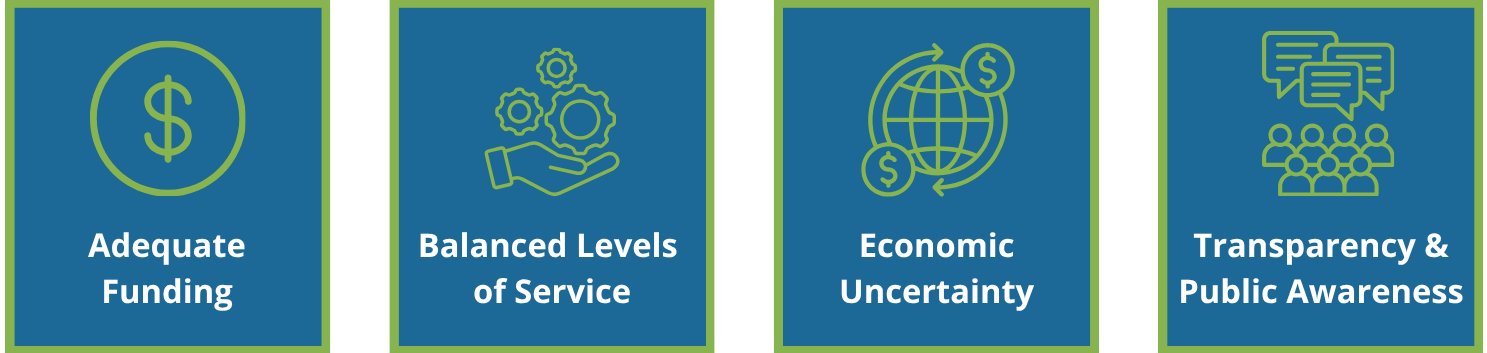
Budgets are considered a point-in-time and information can change after a budget is adopted, such as inflation rates, project costs after procurement, and timelines. These are all risks that we consider when building a budget.
-
 Who provides the service
-
 Electoral Areas
-
Electoral Area A Services (31.1 KB) (pdf)
-
Electoral Area B Services (30.4 KB) (pdf)
-
Electoral Area C Services (31.9 KB) (pdf)
-
Electoral Area D Services (31.2 KB) (pdf)
-
Electoral Area E Services (31.5 KB) (pdf)
-
Electoral Area F Services (30.9 KB) (pdf)
-
Electoral Area G Services (31 KB) (pdf)
-
Electoral Area H Services (31.8 KB) (pdf)
-
-
Municipalities

